A passion for medicine and a commitment to community
February 19, 2026 — In the early 1970s on Chicago’s South Side, at a time when there were few Black physicians around, a young group of future Grinnellians started on their paths in medicine.
Dr. Todd Coulter ’86, Dr. Kim Kuncl ’87, Dr. Eric Whitaker ’87, and Dr. Kimberly Townsend-Scott ’88 grew up within a few blocks of one another in the Morgan Park/Roseland neighborhoods, while Dr. John Bolden ’85 lived a few miles away in South Chatham. Four of the doctors have known each other since second grade while Bolden met everyone at Grinnell.
Their careers were shaped by high-quality early education, followed by participation in a Chicago program for high schoolers that boosted African Americans in medicine and continued at Grinnell College where they received generous financial aid and guidance from alumni.
Early introduction to the magnitude of education and doctors
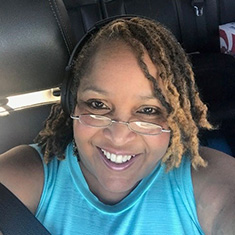 Kimberly Townsend-Scott ’88
Growing up, Bolden attended the University of Chicago Lab school while Kuncl went to St. Catherine of Genoa. Townsend-Scott, Whitaker, and Coulter all attended Holy Name of Mary Elementary School, which was run by the Oblate Sisters of Providence, an order of Black nuns who instilled an extraordinary sense of purpose in their students.
“They made us believe that we could be anything we wanted to be,” says Townsend-Scott. “The Sisters took vows of poverty, and we were taught that life is about giving back to community, and making sure everyone is able to be taken care of.”
All five future doctors went through the multi-year Chicago Area Health and Medical Careers Program (known as CHAMPS) that focused on increasing the number of African American students going into medical careers. Through CHAMPS, they took weekend science courses, visited and worked at local hospitals and labs, and went on trips to college campuses including Grinnell.
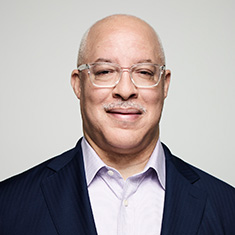 Eric Whitaker ’87
They also took a powerful class called social medicine, which amplified the notion that it’s not enough to be a doctor. You must have an impact in the community.
“You can’t be it if you don’t see it,” says Whitaker, who was the only Black student in his high school honors chemistry class. “It was the first time I saw an African American doctor, and it helped me have a cohort of like-minded people.” And it’s why he chose public health.
“They took us on a site visit to a little clinic at the Robert Taylor Homes, and there were pregnant women lined up outside the door trying to get health care,” he says. “It had a searing effect. It made me want to impact communities where you can reach a lot of people.”
Mentorship and preparation
Dr. Randall “Randy” C. Morgan, Jr. ’65, DS ’92, a pioneering orthopedic surgeon from Gary, Indiana, a life trustee of the College, and the first recipient of the Presidential Lifetime Achievement Award, was one of the facilitators of the CHAMPS program and became a lifelong mentor to many in medical fields.
“As gracious as Dr. Morgan was when I met him at age 15, he’s the same now,” says Coulter, who recalls being a junior at Grinnell, needing to take a summer organic chemistry class at Loyola University and not being able to afford it. “I drove to Indiana, and Dr. Morgan gave me a $500 check to pay for the course.”
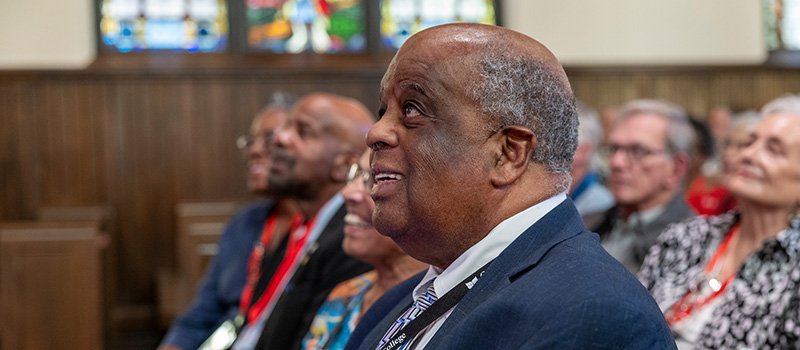 Dr. Randy Morgan ’65, DS ’92 is pictured during Alumni Assembly at Reunion 2025 where he received the Presidential Lifetime Achievement Award.
During Bolden’s first year at Grinnell, Morgan visited campus to check-in with Chicago and Gary-area students. “He advised us about pre-med curriculum and medical school admissions,” Bolden recalls.
Morgan later encouraged Kuncl to serve on Grinnell College’s Board of Trustees. She’s now in her second term as a trustee.
In addition to Morgan’s encouragement, the five South Siders thought a Grinnell education would prepare them well for medical professions.
“It was one of the top colleges for students going to medical school in the country,” Townsend-Scott says. “I knew Grinnell would place me in the position to do what I wanted to do.”
Making an impact in medicine
After finishing medical school at the University of Illinois-Chicago alongside Bolden, Coulter completed his residency and then moved to Pascagoula, Mississippi, where there was a critical need for primary care internists.
A few years later he moved to Ocean Springs, Mississippi, and opened a walk-in clinic, now called Midway Family Care, where patients pay a small flat fee for a doctor’s visit.
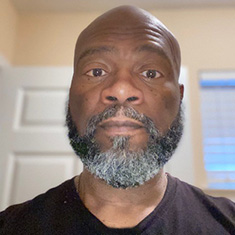 Todd Coulter ’86
“Medical insurance is an unfunded mandate and an obstacle to care,” says Coulter, whose clinic has been featured in national media. “We charge everyone the same; it’s cash only and guess what? It works!”
He also served as a doctor at two local jails, which gave him a chance to mentor and advise. Coulter has two children currently attending medical school in the South.
Kuncl recently retired from her Atlanta, Georgia-area ob/gyn practice, where a third of her patients were medically underserved and under-resourced. But the biology major, former college track athlete, and KDIC DJ hasn’t stopped working.
Now a traveling ob/gyn, Kuncl spends two weeks a month in areas with doctor shortages. Early this year she worked on an Arizona Navajo reservation, and previously she saw patients in Oklahoma on a Cherokee reservation. This spring she’ll work at a rural North Carolina hospital.
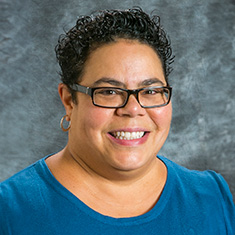 Kim Kuncl ’87
“It’s been eye-opening and a good experience for me,” says Kuncl, who attended medical school at Morehouse School of Medicine.
Bolden was inspired by his mom, a pediatric nurse and pioneering HIV educator in the Chicago public schools, to study infectious disease. Recruited to play baseball at Grinnell, he was a chemistry major with a French concentration and roomed for two years with Coulter. Bolden earned a master’s degree in science and cell biology, then worked at a mental health center while attending medical school at UIC.
More than two decades ago, Bolden was recruited by ER physician Dr. Ben Johnston ’85 to work at Morris Hospital, outside Joliet, Illinois. He was the second Black doctor on staff and the hospital’s first infectious disease specialist. Morris Hospital partners with Will-Grundy County Free Medical Clinic to serve medically underserved populations in Grundy and LaSalle counties.
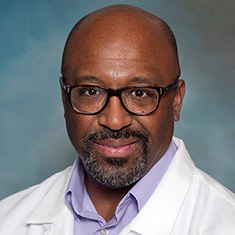 John Bolden ’85
“It’s one of the better decisions I’ve made in terms of career and family, raising our kids out here versus the city,” he says. (Bolden’s son, a molecular biology major at Loyola, will be applying for medical school in fall 2027.) “Since I was the first full time infectious disease specialist, I was able to mold the job.”
In addition to Dr. Morgan, he credits another African American doctor and Rhodes Scholar, Dr. Christopher Johnson ’82, as a role model.
Townsend-Scott is a longtime family physician and maternal medicine specialist who a few years ago switched to delivering care via telehealth. She and her husband Darrell Scott ’87, a retired basketball coach, live in Beverly, on Chicago’s far South Side.
Townsend-Scott attended Rush University Medical School, then worked in West Side clinics and hospitals – areas where residents didn’t have many medical facilities. She worked at several more Chicago-area hospitals, often treating medically underserved immigrants. Though she misses delivering babies, she’s enjoying the freedom of telehealth, where many of her patients have issues with access to care.
“I love taking care of patients. I’ve loved that my entire career,” she says.
Whitaker earned his medical degree from University of Chicago and a master’s of public health from Harvard, where he first met Barack Obama. The Whitakers and Obamas later ended up at University of Chicago – Michelle Obama invited Whitaker to run the Urban Health Initiative – and the two couples and their kids grew close.
Whitaker also founded Project Brotherhood, an innovative weekly clinic for Black men on the South Side and later became the youngest director of the Illinois Department of Public Health.
Several years ago, his foundation took over and expanded the CHAMPS program. The CPASS Foundation focuses on Science, Technology, Engineering, Mathematics, and Medicine (STEMM) along with arts education for middle school through college-level students and provides information to parents about programs throughout the city.
Whitaker’s latest venture is Zing Health, a Medicare plan he founded and runs that’s focused on Black and Brown seniors. “The throughline of all my work is vulnerable populations and folks of color,” he says.
Keeping in touch
With busy careers and family lives, it hasn’t been always easy for the doctors to have regular contact. But they’ve cherished the moments they have spent together.
“Kim, Eric and I have stayed in touch over the years, talking about Grinnell, life, and medicine,” Townsend-Scott says. “We’ve tried to get together but life will be life sometimes! I love and respect both of them; they’re so smart.”
Bolden and Coulter returned to campus in October for Black Alumni Weekend. It was the first time Bolden had been back to Grinnell in about 35 years.
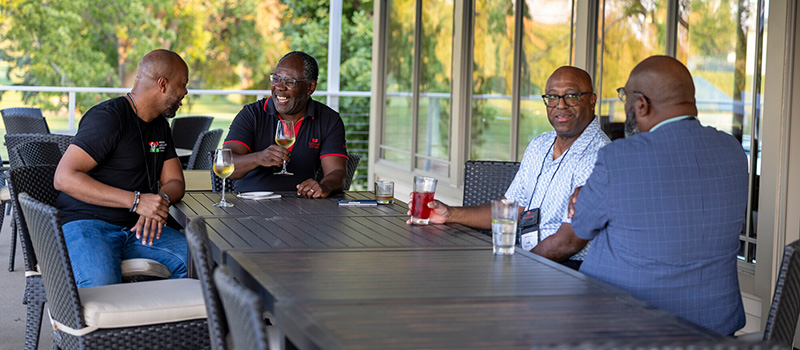 John Bolden ’85 and Todd Coulter ’86, on right, caught up during Black Alumni Weekend in October. Also pictured on left is Derrick Mitchell ’06 and Bernard Jackson ’86.
“It was one of the most fun and emotional weekends that I experienced,” he says. “I walked around campus and a flood of college memories entered my mind. I also reflected on my life and felt that the school has allowed me to experience career success professionally and socially.”
Bolden spent a good portion of the weekend catching up with Coulter as they had not seen each other in person since medical school.
“We spent hours talking and hanging out on Saturday night in the pub in Main Hall’s basement,” Bolden says. “We even had some students join us in conversation. I appreciated Todd's friendship and support throughout my life. It was a wonderful experience catching up with him.”
—by Anne Stein ’84
For your information:
Recent graduates are following in these illustrious footsteps. One example is MJ Ketcha ’23, who is currently enrolled in medical school where he is exploring dermatology and building research skills.
To read more alumni news, check out our news archive and like the Alumni & Friends Facebook page.